

Power Semiconductor Devices For Power Electronics
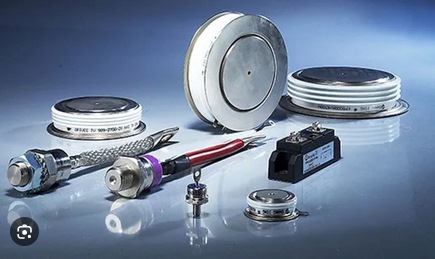
Power Semiconductor Devices For Power Electronics
Published 7/2026
Created by Manuel Gómez
MP4 | Video: h264, 1920x1080 | Audio: AAC, 44.1 KHz, 2 Ch
Level: Intermediate | Genre: eLearning | Language: English | Duration: 32 Lectures ( 3h 30m ) | Size: 2.3 GB
A practical engineering course on device behaviour, switching losses, gate driving, protection and thermal design
What you'll learn
⚡ Understand the operating principles of power diodes, thyristors, IGCTs, MOSFETs, Silicon Carbide MOSFETs, and IGB Ts.
⚡ Analyze static and dynamic behavior, including conduction, blocking, switching transitions, and reverse recovery.
⚡ Identify the key loss mechanisms in power semiconductor devices and estimate their impact on efficiency and heating.
⚡ Understand gate driving requirements for MOSFETs, Silicon Carbide MOSFETs, IGB Ts, and IGCTs.
⚡ Explain protection concepts such as snubbers, desaturation detection, soft turn-off, and safe operating area.
⚡ Evaluate the role of packaging, parasitics, thermal paths, cooling methods, and reliability in real converters.
⚡ Select the right power semiconductor device for a converter application based on voltage, current, frequency, losses, cooling, and cost.
Requirements
❗ Basic knowledge of electrical circuits, including voltage, current, resistance, power, and energy.
❗ Basic understanding of power electronics converters is helpful, but not strictly required.
❗ Some familiarity with semiconductor devices such as diodes and transistors is useful.
❗ No advanced semiconductor physics is required; the concepts are explained from a practical engineering perspective.
Description
This course contains the use of artificial intelligence.
Power semiconductor devices are at the heart of modern power electronics. They define how efficiently a converter switches, how much power it can process, how hot it becomes, and how reliable it will be in real operation.
In this course, you will learn how the most important power semiconductor devices work, including power diodes, thyristors, integrated gate-commutated thyristors, MOSFETs, Silicon Carbide MOSFETs, and IGB Ts.
The course goes beyond the ideal switch model. You will study real device behaviour: conduction losses, switching losses, reverse recovery, tail current, gate driving, snubbers, protection, packaging parasitics, thermal design, cooling methods, reliability, and device selection.
Each section is designed to connect the physical behaviour of the device with practical converter design decisions. You will learn why some devices are better for low-voltage high-frequency converters, why IGB Ts dominate many high-power applications, why Silicon Carbide devices are changing converter design, and why thermal management and packaging are just as important as the semiconductor chip itself.
By the end of the course, you will be able to read power semiconductor datasheets with confidence, understand the main trade-offs between device technologies, and select suitable devices for real power electronics applications such as motor drives, power supplies, renewable energy converters, battery chargers, traction systems, and industrial converters.
This course is ideal for electrical engineering students, power electronics engineers, technicians, and professionals who want a clear and practical understanding of power semiconductor devices used in modern converters.
If you want to understand what really happens inside power electronics switches - and how to select, drive, protect, and cool them properly - this course is for you.
Who this course is for
⭐ Electrical engineering students who want to understand power semiconductor devices used in modern converters.
⭐ Power electronics engineers who want a structured review of diodes, thyristors, MOSFETs, Silicon Carbide devices, IGB Ts, and IGCTs.
⭐ Engineers working with motor drives, renewable energy converters, power supplies, battery chargers, traction systems, or industrial converters.
⭐ Technicians and professionals who need to understand device datasheets, losses, thermal limits, protection, and practical device selection.
⭐ Anyone interested in learning how real power semiconductor devices behave beyond the ideal switch model.
https://rapidgator.net/file/e04ec12b80525320c48f394289d4ded9/Power_Semiconductor_Devices_for_Power_Electronics.part1.rar.html
https://rapidgator.net/file/7eeb8f48e9b40fdc968b2d0f88e6427f/Power_Semiconductor_Devices_for_Power_Electronics.part2.rar.html
https://rapidgator.net/file/21cd2d555320a6324ec994a42c62ee13/Power_Semiconductor_Devices_for_Power_Electronics.part3.rar.html

Information
Users of Guests are not allowed to comment this publication.

