

Blue Sea, Black Gold, Red Banner The South Caucasus and Scandinavia, 1880s–1920s
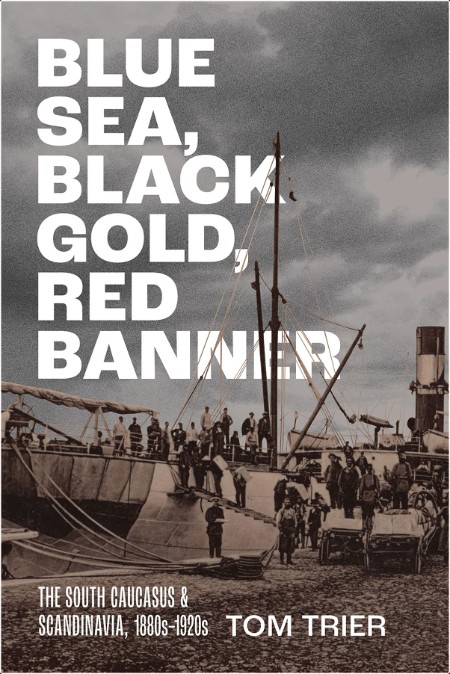
Blue Sea, Black Gold, Red Banner The South Caucasus and Scandinavia, 1880s–1920s | 9.43 MB
Title: Blue Sea, Black Gold, Red Banner The South Caucasus and Scandinavia, 1880s–1920s
Author: Tom Trier
Category: Nonfiction, History, Scandinavia, Social & Cultural Studies, Political Science, International, International Relations
Language: English | 318 Pages | ISBN: 9781501787935
Description:
Blue Sea, Black Gold, Red Banner tells the story of the historical connections between two geographically distant and culturally distinct regions on the edges of Europe: Scandinavia and the South Caucasus. From the late nineteenth century, maritime trade fostered new commercial links and consular relations. Scandinavian merchants, particularly in Batumi and Baku, played key roles. The discovery of oil along the Caspian Sea shores attracted Scandinavian entrepreneurs, notably the Swedish Nobel family, helping to develop Baku into a booming industrial hub.
Tom Trier focuses on the years of upheaval surrounding World War I and the collapse of the Russian Empire, when Georgia—along with Armenia and Azerbaijan—briefly emerged as an independent rlic. The four-decade relationship ended abruptly during the Bolshevik Red Army's invasion of the South Caucasus from 1920 to 1921. Drawing on both Scandinavian and Georgian perspectives, Blue Sea, Black Gold, Red Banner examines how Nordic merchants, consuls, and diplomats navigated the shifting political landscape and how Georgia's social democratic leadership looked to neutral Scandinavia as a gateway to broader European political, diplomatic, and economic engagement.
DOWNLOAD:
https://rapidgator.net/file/33dc3b1369698671f57a6b718f12ae08/Blue_Sea_Black_Gold_Red_Banner_The_South_Caucasus_and_Scandinavia_1880s-1920s.rar
https://nitroflare.com/view/E3826BACAC389E7/Blue_Sea_Black_Gold_Red_Banner_The_South_Caucasus_and_Scandinavia_1880s-1920s.rar
Blue Sea, Black Gold, Red Banner tells the story of the historical connections between two geographically distant and culturally distinct regions on the edges of Europe: Scandinavia and the South Caucasus. From the late nineteenth century, maritime trade fostered new commercial links and consular relations. Scandinavian merchants, particularly in Batumi and Baku, played key roles. The discovery of oil along the Caspian Sea shores attracted Scandinavian entrepreneurs, notably the Swedish Nobel family, helping to develop Baku into a booming industrial hub.
Tom Trier focuses on the years of upheaval surrounding World War I and the collapse of the Russian Empire, when Georgia—along with Armenia and Azerbaijan—briefly emerged as an independent rlic. The four-decade relationship ended abruptly during the Bolshevik Red Army's invasion of the South Caucasus from 1920 to 1921. Drawing on both Scandinavian and Georgian perspectives, Blue Sea, Black Gold, Red Banner examines how Nordic merchants, consuls, and diplomats navigated the shifting political landscape and how Georgia's social democratic leadership looked to neutral Scandinavia as a gateway to broader European political, diplomatic, and economic engagement.
DOWNLOAD:
https://rapidgator.net/file/33dc3b1369698671f57a6b718f12ae08/Blue_Sea_Black_Gold_Red_Banner_The_South_Caucasus_and_Scandinavia_1880s-1920s.rar
https://nitroflare.com/view/E3826BACAC389E7/Blue_Sea_Black_Gold_Red_Banner_The_South_Caucasus_and_Scandinavia_1880s-1920s.rar

Information
Users of Guests are not allowed to comment this publication.

