

Certification In Biomedical Imaging Systems
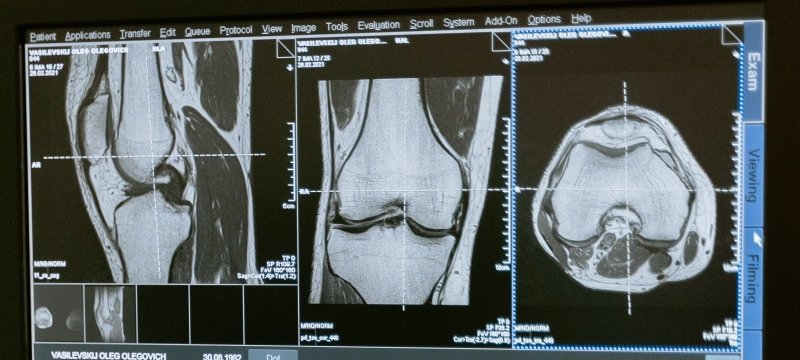
Certification In Biomedical Imaging Systems
Published 2/2026
MP4 | Video: h264, 1920x1080 | Audio: AAC, 44.1 KHz, 2 Ch
Language: English | Duration: 2h 24m | Size: 2 GB
Uncover how sound, radiation, and light are transformed into life-saving images using advanced biomedical systems.
What you'll learn
Trace the historical evolution of imaging technologies and distinguish how clinical and research imaging have advanced medical understanding.
Analyze the complete anatomy of imaging systems including source, sensor, processing pipeline, and visualization interface.
Learn the underlying wave physics of sound, electromagnetic, and radio waves used in different imaging modalities.
Understand core signal interactions—attenuation, scattering, absorption, and transmission—and their impact on image quality.
Apply mathematical tools like Fourier transforms and filtering in the reconstruction and enhancement of medical images.
Differentiate between structural and functional imaging techniques and their relevance in diagnosis and monitoring.
Interpret contrast mechanisms such as T1/T2 relaxation, Hounsfield units, and echo time across various modalities.
Explore ultrasound principles including acoustic impedance, piezoelectric transducers, and imaging modes like A, B, and M-mode.
Understand Doppler ultrasound for flow imaging and trends in wearable, point-of-care ultrasound devices.
Master MRI concepts—nuclear magnetic resonance, RF pulses, T1/T2 relaxation, and sequences like Spin Echo, FLAIR, and Gradient Echo.
Examine fMRI and MR spectroscopy to study brain activity and molecular tissue profiles.
Learn about X-ray generation, attenuation physics, flat-panel vs. CCD detectors, and CT scanner geometries like fan, helical, and cone-beam.
Study image reconstruction methods including filtered back projection and iterative reconstruction.
Apply knowledge of dose management and optimization in ionizing imaging procedures.
Understand radioisotopes like F-18, Tc-99m, and the physics behind PET and SPECT imaging, including time-of-flight and collimation.
Explore optical imaging techniques such as fluorescence, NIRS, confocal, and multiphoton microscopy.
Learn about real-time and intraoperative imaging, endoscopic integration, and the emergence of optical molecular probes.
Study DICOM standards, PACS systems, and digital infrastructure supporting image storage and exchange.
Apply AI, ML, radiomics, and segmentation techniques to interpret and enhance biomedical images.
Gain insights into imaging hardware including power, cooling, shielding, and understand safety and global regulatory frameworks.
Requirements
Interest in healthcare technology, medical devices, diagnostics, or research, especially for learners aiming to work in clinical, industrial, or academic settings.
Description
Biomedical imaging stands at the intersection of technology, physics, biology, and clinical medicine, offering a transformative lens into the structure and function of the human body. This comprehensive course on Biomedical Imaging Systems takes learners on an in-depth journey through the evolution, principles, and applications of modern imaging technologies, from historical X-rays to emerging AI-enhanced modalities. The program begins by tracing the historical progression of imaging in medicine and biology, followed by distinctions between clinical and research imaging workflows. Students are introduced to the anatomy of imaging systems, spanning from energy sources to sensors, data processing, and final visualization.The curriculum offers a structured exploration of wave physics—acoustic, electromagnetic, and radio—and fundamental concepts like attenuation, scattering, Fourier transforms, and image reconstruction. It dives deep into contrast mechanisms such as T1/T2 relaxation, Hounsfield units, and echo time, laying the groundwork for modality-specific modules. Ultrasound imaging topics cover acoustic impedance, piezoelectric transducers, B-mode and Doppler techniques, and the rise of portable/wearable systems. The MRI section spans NMR principles, field gradients, sequences like FLAIR and spin echo, and applications like fMRI and spectroscopy.Radiological topics include X-ray physics, digital detectors, CT scanner geometries, reconstruction algorithms, and radiation dose optimization. The nuclear medicine segment examines PET, SPECT, hybrid imaging, and tracer physics. Optical imaging modalities like fluorescence, NIRS, and multiphoton microscopy are introduced alongside innovations in endoscopy and intraoperative visualization.Advanced lectures address image post-processing—denoising, segmentation, AI/ML tools, radiomics—and the underlying hardware design challenges such as shielding, cooling, and power systems. Students will also gain an understanding of international safety standards (ionizing radiation, MRI zones), regulatory compliance (ISO, FDA), and digital infrastructure (DICOM, PACS). This course equips aspiring biomedical engineers, radiologic technologists, and healthcare innovators with the knowledge to master imaging systems of the past, present, and future.
Who this course is for
Students pursuing biomedical engineering, medical physics, radiology, or related healthcare technology programs who want a strong foundation in imaging systems.
Medical professionals, radiologic technologists, and clinical researchers looking to understand the technical underpinnings of imaging devices and their diagnostic applications.
Engineers and developers interested in medical device design, signal processing, AI in imaging, or developing image analysis tools.
Life science and biology researchers who rely on imaging for visualizing molecular, tissue-level, or organ-level processes in their studies.
Healthcare technology managers and regulatory professionals aiming to bridge clinical workflows with imaging equipment, standards, and compliance.
Innovators and startup founders working on portable, wearable, or AI-driven imaging devices and looking to understand imaging modalities and system integration.
Data scientists and AI practitioners applying machine learning to image segmentation, classification, or radiomics projects in the healthcare space.
Graduate students or early-career researchers aiming to contribute to translational imaging science, preclinical imaging, or medical diagnostics.
Educators and academic instructors who want structured content and slide-ready material for teaching biomedical imaging fundamentals.
Anyone curious about how modern medicine "sees" inside the body—from X-rays and MRIs to PET scans and fluorescence imaging—across clinical, research, and engineering perspectives.
https://rapidgator.net/file/f6eb66dcf135ba3639c4cb684b8927ae/Certification_in_Biomedical_Imaging_Systems.part3.rar.html
https://rapidgator.net/file/69a84ab786829c33cff6d4170f6929d3/Certification_in_Biomedical_Imaging_Systems.part2.rar.html
https://rapidgator.net/file/cadb3c9ceaf0e86d6884d8b0f01c443f/Certification_in_Biomedical_Imaging_Systems.part1.rar.html

Information
Users of Guests are not allowed to comment this publication.

